

Washing your car is one of the basic activities that give it an elegant and beautiful look. Best…

Touchless car wash – everything you need to know about it
(photo: Unsplash)

Washing your car regularly has many advantages that we, as drivers, often forget about. It allows you to get rid of lingering dirt and road salt in winter and restore the shine of the paint. What do we do to wash our car? We usually have several options. We can wash the car on the property if we can. It is laborious and time-consuming, but it allows you to wash the car thoroughly. Or we can use the car wash. In this case we also have different options. We can wash the car in an automatic or touchless car wash, where we can direct the water jet ourselves. The most frequently chosen option is touchless car washes. As with many issues, here we will find both advantages and disadvantages.
What is a touchless car wash?
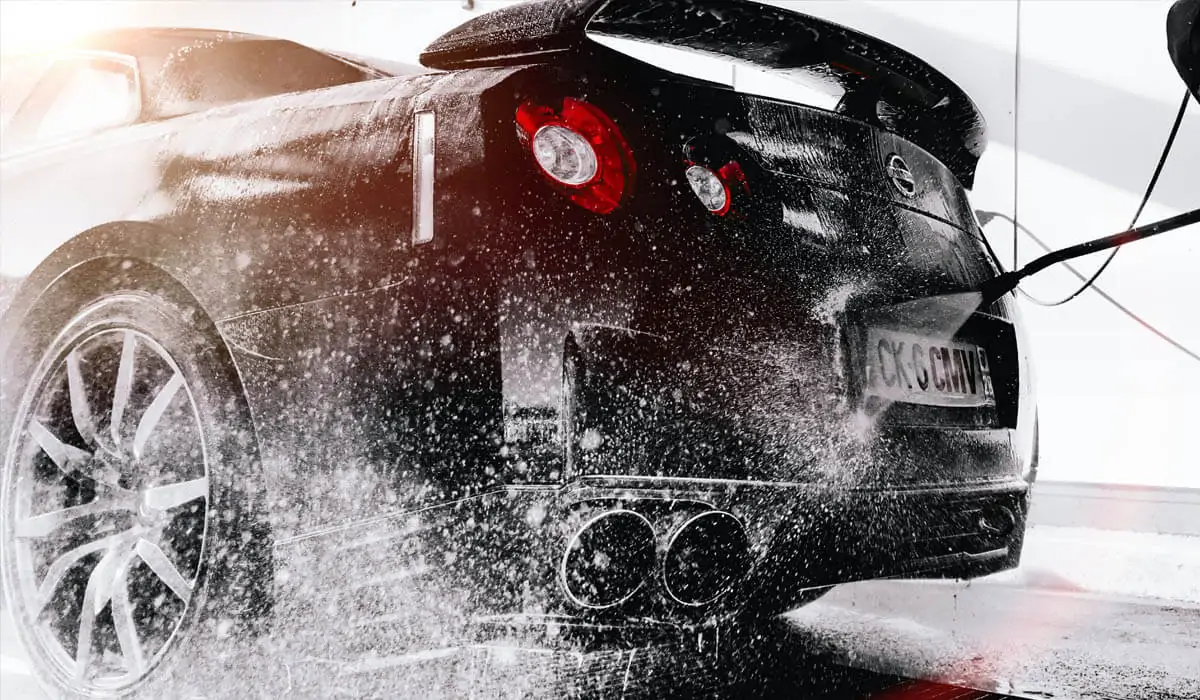
First and foremost, a touchless car wash , as the name suggests, allows you to wash your vehicle without physical contact with the surface being washed. Washing is accomplished by directing a jet of water onto the vehicle's surface. This has its advantages, including:
- no contact of hands, cloths or other cloths with the paint surface or cleaning agent,
- pressure washing because it allows you to remove stubborn dirt,
- thorough washing of hard-to-reach areas of the vehicle's body, wheels and chassis,
- using special chemicals that are gentle on the paint.
A touchless car wash is a great invention because it relieves the driver and saves time. This is obviously true, but it is not always the ideal option because it also has disadvantages. Unfortunately, they often reveal themselves long after time, undoubtedly with regular washing using this method. These include primarily:
- enlargement of previously existing paint damage,
- pressure pressing dirt between the seals, which leads to their damage,
- if the lance is used incorrectly, it is possible to damage the paint and even mirrors or windows,
- possibility of paint damage, especially on newly painted elements.
Looking at the advantages and disadvantages, we have it in black and white that a touchless car wash is not always a good choice.
Touchless, manual and automatic car wash – differences
In addition to manual car washes, you can also opt for a touchless automatic car wash. Unfortunately, these aren't available in every city. The principle behind them is very similar. However, unlike a manual car wash, the lances and pressure are optimally adjusted for washing the vehicle. Opinions about touchless car washes vary! On the one hand, the risk of mechanical damage to the paintwork or other sensitive vehicle components is lower. However, accuracy can be a problem in hard-to-reach areas. Here again, the importance of the human factor becomes apparent. By manually controlling the lance, it becomes possible to reach difficult and persistently dirty spots. An automatic car wash, no matter how advanced, can miss them.
How to optimally use a touchless car wash?
Want to know how to wash your car at a touchless car wash? A way to thoroughly clean your car at a touchless car wash is to perform a manual and thorough pre-wash. The toughest stains can be removed manually using cloths or towels, further dampening the dirt, which will shorten the pressure washing process. This applies to painted rims, exterior mirrors, and plastic headlights, as these are eye-catching exterior elements and require careful care. Direct and prolonged pressure washing could undoubtedly contribute to microscopic scratches and even microcracks . This would initiate degradation of the component and likely require expensive repairs or replacement.
Read also: How to wash your car without scratching the paint?
Vehicles covered in mud and sand likely require an equally meticulous approach. They must be cleaned manually before undergoing a touchless wash , as this reduces the risk of scratching the paintwork. Sand and mud contain solid, hard particles that can immediately damage the body's paintwork, the underbody's protective coating, and even the rims. It's worth remembering that washing electric cars is no different than washing combustion cars.
Available washing programs and their functions
Touchless car washes offer a range of washing programs that meet the diverse needs of drivers. Among the most popular services are:
- pressure washing,
- active foam,
- waxing,
- polishing,
- cleaning hard-to-reach places.
A strong water jet effectively removes dirt, and many car washes also offer active foam , which, when combined with appropriate detergents, significantly increases cleaning effectiveness.
Waxing creates a protective barrier on the paint, increasing its resistance to adverse weather conditions and facilitating subsequent washing. Polishing programs give the bodywork a beautiful shine, contributing to the vehicle's overall aesthetic.
Touchless car washes often offer solutions focused on thoroughly cleaning hard-to-reach areas, such as the undercarriage or rims. Thanks to various nozzles and water jets, you can reach places that a standard wash might not be able to reach. This approach not only increases cleaning efficiency but also minimizes the risk of paint damage.
In addition to basic programs, many touchless car washes offer additional services , such as detailing and interior cleaning . This wide range of options allows drivers to perfectly tailor the washing process to their vehicle's individual needs. Choosing the right program is crucial to achieving satisfactory results and protecting the car's paintwork.
Active foam, micropowders and rules for thorough rinsing
Active foam plays a key role in effective car washing in a touchless car wash . This special chemical significantly improves cleaning results while also protecting the paintwork. Thanks to its thick formula, it penetrates hard-to-reach areas, effectively eliminating various contaminants. Combining its action with appropriate water pressure produces excellent washing results.
Active foam contains micropowders, such as silica, which act as a gentle abrasive. They effectively remove dirt from the vehicle's surface without scratching. The addition of micropowders significantly increases the effectiveness of touchless washing and also positively impacts the paint's protective properties.
When using a touchless car wash, thorough rinsing is crucial. Proper pressure and rinsing technique are crucial to avoid chemical residues that can damage the paint. It's recommended to hold the lance approximately 40–50 cm from the bodywork for maximum effectiveness without risking damage.
Thorough rinsing after applying active foam and cleaning is essential to achieve optimal results. Thanks to the chemicals used and the appropriate pressure, touchless car washes successfully remove any remaining dirt. This contributes to better paint protection, which in turn increases the durability of the car's exterior.
Optimal lance distance and the importance of the user manual for paint protection
The optimal distance for using a touchless car wash lance from the bodywork should be between 40 and 50 cm . Maintaining this distance is crucial for protecting the paintwork. If the lance is too close, the intense, pressurized water jet can damage the paintwork, which in turn can lead to microscopic scratches or even more serious defects.
It is also worth remembering:
- to the bore of appropriate detergents,
- active foam,
- manual pre-cleaning of heavily soiled areas such as rims or headlights.
These features not only simplify the cleaning process but also provide additional protection for the paintwork. Before you begin washing, it's a good idea to read the equipment's instruction manual; this will help you get the most out of it and reduce the risk of damage.
By adjusting the spray nozzle distance and following the manufacturer's recommendations, we increase paint safety, which translates into longer durability . Knowing these rules is crucial for every driver who wants to keep their vehicle in top condition.
Summary
It should be mentioned that washing with any method, including the touchless method, requires skill. Then you can count on thorough washing and protection of the car against dirt re-adhering. To sum up, among the many advantages of touchless car washes, one can single out one thing - total control. With the lance in your hand, you can freely direct the water jet at a given element and part of the body and chassis. This is so important that, depending on the condition of the paint, it should not be exposed to high-pressure water. This especially applies to body parts that have been painted recently (up to half a year), as they may be damaged.
FAQ
What is a touchless car wash?
A touchless car wash is a type of car wash that cleans your car using a pressurized water jet, without any physical contact with the surface being washed. It uses special chemicals that are gentle on the paint.
What are the advantages of a touchless car wash?
The main advantages are: no physical contact with the paint, precise removal of contaminants using pressure, the ability to wash hard-to-reach places such as the chassis and rims, and the use of specialized, paint-safe detergents.
Are there any disadvantages to washing in a touchless car wash?
Yes. Disadvantages include the risk of exacerbating existing paint damage, the possibility of injecting dirt into seals, and potential damage to paint, mirrors, or windows if the wand is not used correctly. The risk is greater with regular washing using this method.
What is the difference between a touchless car wash and an automatic car wash?
A touchless car wash requires manual operation of the lance, allowing for precise access to hard-to-reach areas. In an automatic car wash , the lance and pressure are optimally adjusted by the machine, which reduces the risk of damage but may result in missing some heavily soiled areas.
How far away should I hold the lance to avoid damaging the paint?
The optimal distance between the lance and the bodywork is 40-50 cm . Using it too close can cause microscopic scratches or even more serious paint damage. It's worth reading the instruction manual.

